Oklahoma Farm Report

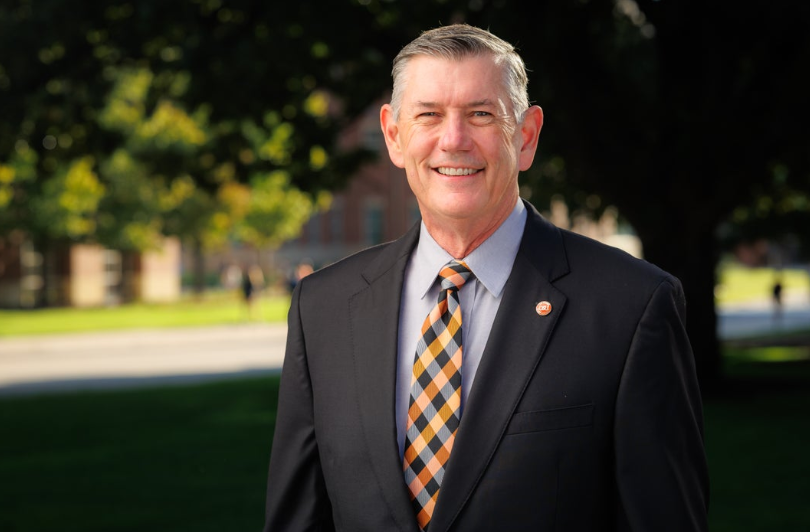
Ferguson College’s Terry Receives Teaching Award
Dr. Robert Terry Jr., the Rodger Howell Memorial Professor of Agricultural Education in Oklahoma State University’s Ferguson College of Agriculture, was named a regional recipient of the Association of Public and Land-grant Universities’ 2026 Excellence in College and University Teaching Award for Food and Agricultural Sciences.
This national recognition is a partnership between the United States Department of Agriculture and APLU and is awarded to faculty members from public institutions in the U.S. who have demonstrated excellence in agricultural sciences teaching and student engagement.
For Terry, teaching is a family tradition. Growing up in Stillwater, Oklahoma, surrounded by educators and agriculture, he developed an early appreciation for the impact teachers can have on students.
His involvement in FFA, particularly through public speaking and agricultural projects, helped shape his interest in education. However, it was the influence of his own teachers that inspired him to pursue a career in agricultural education.
“Growing up around educators, I saw firsthand the influence teachers have on young people,” Terry said. “My experiences in agricultural education and FFA only strengthened my interest in becoming a teacher.”
Throughout his career, Terry has embraced both the science and artistry of teaching.
“Teaching is both an art and a science,” he said. “The science gives us research-based principles to guide our instruction, but the art is how we bring those principles to life through passion, creativity and connecting with students.”
Terry has taught undergraduate and graduate courses focused on the philosophies and foundations of agricultural education, encouraging students to explore the characteristics of effective teachers and develop their own approaches to instruction.
“I like to think about teaching methods as the teacher’s toolbox,” Terry said. “The more tools you have, the better you are as far as being able to connect and make the learning permanent.”
Terry emphasizes the importance of adapting teaching methods to meet the needs of different students, subjects and learning environments.
“We have all kinds of different challenges to face as educators, so we better develop a mastery of a variety of tools,” he said.
Terry’s innovative approach to teaching, attention to student learning and commitment to excellence have made a lasting impact on countless students, said Dr. Cynda Clary, associate dean of the Ferguson College of Agriculture.
“He has a special ability to make learning meaningful through thought, creativity and care in every class he teaches,” Clary said. “He always keeps student success at the center of his work.”
As a professor preparing future educators, Terry said he hopes his students leave his classroom not only with knowledge but also with the skills and confidence to influence others.
For Terry, some of the most rewarding moments in his career come after students leave his classroom and begin making an impact of their own.
One recent experience provided a powerful reminder, Terry said. A former student who graduated with an agricultural education degree in May returned to campus with six FFA members from the school where he now teaches. Watching the interaction between the new teacher and his students reinforced the significance of the profession.
“I was impressed to see how those kids looked up to him, being less than a semester into his career,” Terry said. “It’s clear he’s already developed a connection with those kids as their teacher. He’s the person they look up to. He’s embraced that role, and they’ve embraced him in that role. That was inspirational for me.”
Terry said moments like these affirm the importance of preparing the next generation of educators who will continue shaping the future of agricultural education.
Terry credits much of his success to the support of his family, especially his wife, Anne, as his responsibilities extend far beyond the traditional classroom, including advising student organizations and leading study away and study abroad experiences.
“My wife has been incredibly supportive of the extra hours. Teaching goes way beyond the classroom.”
Reflecting on his career, Terry remains grateful to work at an institution that continues to elevate teaching alongside research and innovation.
“At OSU, we still believe teaching matters and students are important,” he said. “We’re an R1 research institution, great at creating knowledge and innovation, but this is still a place where teaching really matters.”
The Ferguson College of Agriculture believes in the value of hands-on education and the importance of having a well-rounded student experience. The college’s award-winning faculty members are dedicated to developing students and are passionate about adding value to the total educational experience. With 16 majors, a variety of study options and more than 60 student organizations, the college is committed to expanding minds and inspiring purpose. Learn more at agriculture.okstate.edu
STORY BY: Elisabeth Moser, master’s student in agricultural communications
The post Ferguson College’s Terry Receives Teaching Award first appeared on Oklahoma Farm Report.
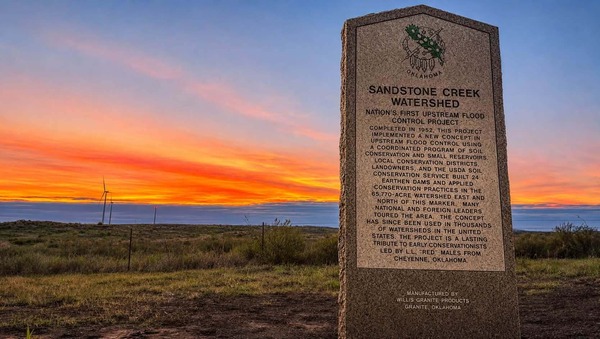
New Historical Marker Dedicated to Sandstone Creek Watershed
On Tuesday, November 17, 2026, a new historical marker was dedicated by the Oklahoma Conservation Historical Society identifying Sandstone Creek Watershed as the nation’s first upstream flood-control project. Completed in 1952, this project brought together local conservationists, landowners, conservation districts, and the USDA Soil Conservation Service (now known as the Natural Resources Conservation Service, or NRCS) to build 24 earthen dams across a 65,770-acre watershed between Cheyenne, Sayre, Elk City and Hammon.
Today, the Sandstone Creek Watershed project has grown to 42 flood-control dams, with 23 in Roger Mills County and 19 in Beckham County. This project initially began after an April 1934 storm resulted in tragedy, with 17 lives taken due to flooding around Hammon, Oklahoma. With 184 flood-producing storms occurring between 1920 and 1939, local leaders, including Lowell Lawrence “Red” Males, advocated for change. As a result, Sandstone Creek was the first watershed to complete its entire planned system of dams and conservation practices.
“We are grateful to the Oklahoma Conservation Historical Society for providing this dedication, recognizing and remembering a monumental win for our state. We are proud to carry on the legacy of Sandstone Creek and continue the work of the conservationists that came before us,” said Tammy Sawatzky, OCC Director of Conservation Programs.
The Oklahoma Conservation Commission, along with local conservation districts within the watershed and partners like NRCS, actively manages, rehabilitates, and maintains the flood control dams, protecting approximately 4,700 acres of floodplain, 60 farms and ranches, reducing sediment by around 296,000 tons every year, and providing an estimated $356,500 in average annual benefits from reducing flood damage in the area.
Learn more about the history behind Sandstone Creek Watershed here: Sandstone Creek – Nation’s First Small Watershed Project — Oklahoma Conservation Historical Society
The post New Historical Marker Dedicated to Sandstone Creek Watershed first appeared on Oklahoma Farm Report.

Lankford Announces New State Director
US Senator James Lankford (R-OK) today announced former Speaker of the Oklahoma House of Representatives Jeffrey W. Hickman, from Fairview, Oklahoma, will serve as State Director, overseeing the Senator’s Oklahoma City and Tulsa field offices.
“I’m excited to have Jeff Hickman join our team as State Director,” said Lankford. “He understands this state because he has lived it from the family farm to the state Capitol. Jeff’s background will be an asset to our team and his heart to serve families will be a blessing for all Oklahomans. I’m grateful for his willingness to lead our fantastic state team.”
Hickman most recently served as president and CEO of the Oklahoma Grain and Feed Association. He also recently completed a nine-year term on the Oklahoma State Regents for Higher Education. A fifth-generation farmer, Hickman continues to help run his family’s operation near Dacoma and Cherokee in northwest Oklahoma.
“I’m grateful for the opportunity to continue serving Oklahomans in the role of State Director for Senator James Lankford,” said Hickman. “Senator Lankford’s state offices are staffed by dedicated field representatives and caseworkers who stay with a problem until it’s solved. I look forward to supporting that work and making sure every Oklahoman who calls on our offices is heard and helped.”
Background
Elected to the Oklahoma House of Representatives in 2004, Hickman served as Speaker of the House for three legislative terms, from 2014 to 2016. He spent seven years working in higher education at the University of Oklahoma, where he served as university press secretary, public affairs special projects coordinator, and as special assistant to the director of athletics.
Hickman earned his bachelor’s degree in journalism with distinction from the University of Oklahoma. He and his wife, Jana, live in Fairview, Oklahoma, and have three children.
The post Lankford Announces New State Director first appeared on Oklahoma Farm Report.
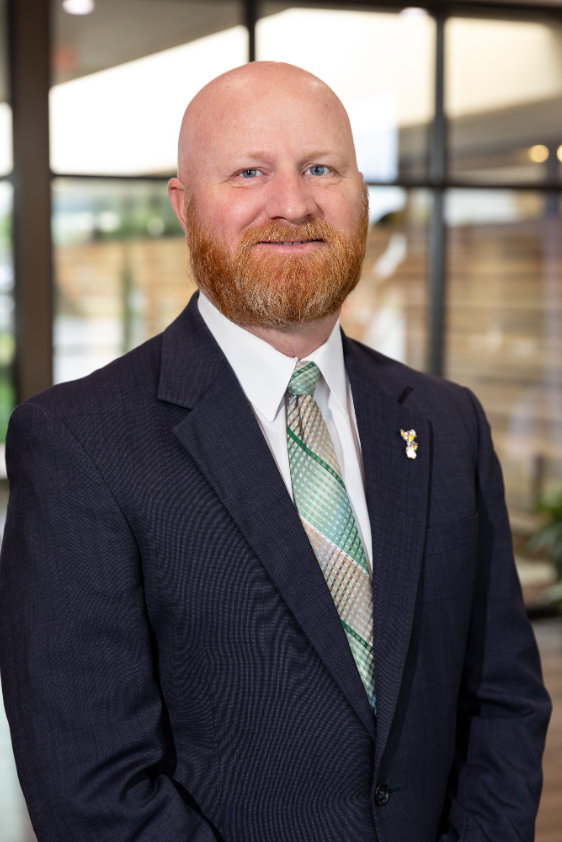
Electric Cooperatives Select Brent Howard as In-House General Counsel
The Oklahoma Association of Electric Cooperatives (OAEC) is pleased to welcome Brent Howard as its first in-house general counsel, bringing a wealth of legal experience, public service and deep-rooted connections to rural Oklahoma to the association representing the state’s 30 electric cooperatives.
For Howard, joining the cooperative family is more than a career change. It’s a natural extension of a lifetime spent rooted in rural Oklahoma, shaped by public service and connected to the people and communities electric cooperatives serve.
A fifth-generation Oklahoman, Howard was raised in southwest Oklahoma on the same farmland homesteaded by his great-great-grandfather, A.L. Howard, before statehood. His family’s wheat, cattle and hay operation is powered by Southwest Rural Electric Association, where Howard has been a lifelong member and grew up attending the co-op’s annual meetings. He has also served as contract attorney for Harmon Electric Association, headquartered in Hollis.
His connection to public service began early. Growing up, Howard watched both of his parents serve their community. His father balanced work on the family farm with eight years as a county commissioner, while his mother worked in a law office and served eight years as county treasurer. Some of Howard’s earliest memories include stopping by the law office after school and piano lessons while his mother finished her workday. Those experiences helped plant the seed for what would become his career in law.
After graduating from small rural Navajo High School, where his class included just 44 students, Howard earned bachelor’s degrees in economics and accounting from Oklahoma State University. He went on to earn his Juris Doctor from the University of Oklahoma College of Law and a Master of Laws (LL.M.) in Taxation from New York University.
After a short stint working for two law firms in Oklahoma City, Howard chose to return to southwest Oklahoma, establishing a law practice near his family’s farm and the agricultural community he knew so well. His practice focused primarily on taxation, estate planning and business planning, giving him a firsthand understanding of the legal and financial challenges facing Oklahoma families, businesses and agricultural operations.
Howard also graduated from Class 16 of the Oklahoma Agricultural Leadership Program, where he met his wife, Jennifer. The two married in 2016.
His commitment to public service eventually led him to the Oklahoma Senate. After launching his campaign for Senate District 38 in 2017, Howard won election in 2018 and began serving the 57th Oklahoma Legislature.
During his eight years in the Senate, Howard focused on civil procedure, government oversight, rural development, water and resource management. He played a key role in some of the state’s most consequential legislative discussions, including legislation addressing open meetings during the pandemic. He became chair of the Senate Judiciary Committee at the beginning of his fourth year and was named chief presiding officer of the Senate in his fifth year.
Howard considers one of his most meaningful contributions in Senate to be preventing harmful legislation from advancing. Throughout his tenure, he remained a strong friend and advocate of electric cooperatives, recognizing their vital role in powering lives and empowering communities across Oklahoma.
“Brent Howard is a man of integrity who fits naturally into the cooperative family,” said Nicki Fuller, OAEC general manager and CEO. “We needed someone with his legacy of service, strong values and understanding of rural Oklahoma to help advocate for our electric cooperatives. His legal expertise, legislative experience and personal connection to the cooperative way of life make him an incredible asset to our organization. We are grateful he is bringing his talents to the cooperative movement full time.”
After eight years in the Oklahoma Senate, Howard began considering what the next chapter of his career would look like. With his five-year-old daughter, Estelle, preparing to begin kindergarten, the opportunity to serve Oklahoma’s electric
cooperatives offered a meaningful way to bring together his professional experience and lifelong commitment to rural communities.
“I’m truly looking forward to this new chapter,” Howard said. “I have always been a champion of the rural way of life. This is an exciting time to join the electric cooperative family. I look forward to serving the cooperatives and helping shape policy surrounding large loads, technology and generation resources while protecting the quality of life in rural Oklahoma.”
Howard and his wife, Jennifer, currently live in Altus with their daughter, Estelle. The family plans to relocate to the Oklahoma City metro area in the future.
The post Electric Cooperatives Select Brent Howard as In-House General Counsel first appeared on Oklahoma Farm Report.
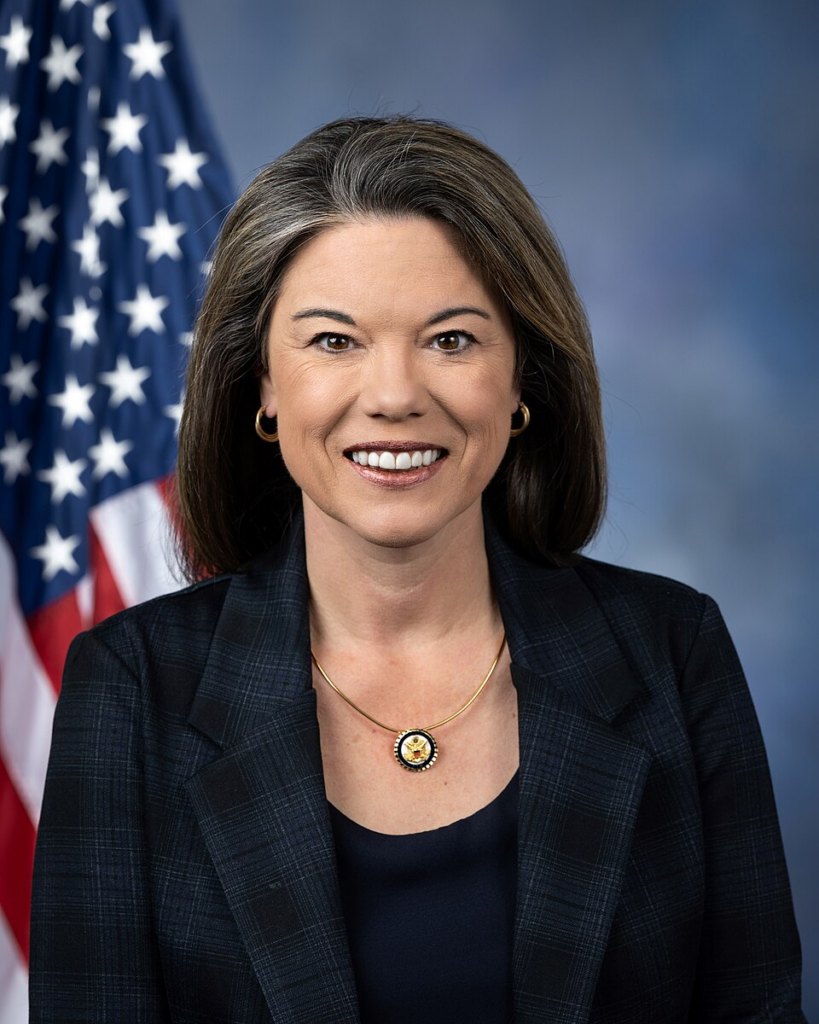
Ranking Member Angie Craig Opening Statement at Rural Development Hearing
Today, House Agriculture Committee Ranking Member Angie Craig (MN-02) delivered the following opening statement at a Subcommittee on Commodity Markets, Digital Assets, and Rural Development hearing entitled “Strengthening Rural America Through USDA Rural Development Programs and Partnerships.” Watch the hearing here.
[As prepared for delivery.]
Thank you, Chairman Johnson and Ranking Member Davis, for holding today’s hearing, and a thank you to our witnesses for being here today to discuss the power and promise of USDA Rural Development. I am especially excited to see Ms. Lori Blair here from my home state of Minnesota.
The United States Department of Agriculture touches every family in America. Whether you’re a farmer growing food or a working parent trying to put dinner on the table – USDA programs and policies stretch from the farmgate to the grocery store shelf.
President Lincoln called it the “People’s Department.” Today, it is living up to that nickname. Anchored in its network of local offices, USDA has one of the most widespread footprints of any federal department.
USDA field offices and staff are present – and have roots – in almost every county, no matter how rural, no matter how geographically remote, no matter the population size.
USDA staff don’t just work in rural America; they live there. They know their neighbors; they know the pressures and concerns of their local communities.
That makes USDA uniquely situated not only to understand and connect with, but also to help rural communities, whether it’s providing technical assistance for farmers or helping someone afford their first home.
That is why I, and many of my colleagues, have forcefully opposed this administration’s reorganization efforts, which courts have at least for now stayed on legal grounds. Whether it’s relocating offices, closing offices or downsizing staff, this reorganization hurts rural America.
For the same reason, taking Rural Development away from USDA and placing it elsewhere, like the Small Business Administration, will undermine its mission and make it harder for farmers, rural business owners, working people and municipalities to access Rural Development programs.
We say that in rural America, “neighbors help neighbors.” And yet, there are some in this country who would like to see our neighbors fired, our neighborhood offices closed and the experts that know the neighborhood issues outsourced to strangers hundreds of miles away.
The work USDA Rural Development does matters because the communities it serves matter. The people who live there are important. Abandoning them by downsizing vital staff and relocating USDA Rural Development programs sends the wrong message.
I look forward to hearing your testimony and to learning more about the amazing things you are doing in partnership with USDA RD.
Thank you again for being here today, and I yield back.
The post Ranking Member Angie Craig Opening Statement at Rural Development Hearing first appeared on Oklahoma Farm Report.

Oklahoma Cattlemen’s Association Calls for Postponement of State Wind Lease Auctions
The Oklahoma Cattlemen’s Association (OCA) is calling on the Oklahoma Commissioners of the Land Office (CLO) to postpone its December 7, 2026, auction of seven proposed wind energy leases encompassing approximately 169,000 acres of state trust land in Cimarron County.
In a letter to CLO Acting Secretary John Fischer and the five Commissioners, OCA expressed concerns regarding the proposed 55-year commercial leases and their potential impacts on existing agricultural operations, private property rights, and surrounding communities.
“Our concern is not with wind energy development itself. We have consistently defended the rights of private property owners to determine the best use of their land,” said Ford Drummond, OCA President. “However, when the state considers committing this much land to 55-year agreements, it has a responsibility to thoroughly evaluate the consequences for agricultural producers and neighboring landowners.” Of primary concern is how the proposed 55-year wind leases would interact with existing agricultural leases, which are limited to five-year terms. OCA questions how agricultural lessees will be protected when conflicts arise over property access, construction activities, infrastructure placement, compensation for damages, and future agricultural improvements.
OCA also raised concerns regarding the transmission infrastructure that may be necessary to deliver electricity generated by the proposed developments. Additional transmission lines could require easements across privately owned agricultural lands, potentially involving the use of eminent domain authority. OCA is requesting additional information regarding anticipated transmission routes, interconnection arrangements, and potential impacts on private landowners.
“Ranchers leasing state land make significant investments in their operations, yet they operate under five-year agreements while a wind developer could receive rights extending more than half a century,” Drummond said. “We need to understand how those rights will coexist and whether additional transmission infrastructure could place private landowners in the position of having to defend their property rights.”
The association also questioned whether Cimarron County and its residents would receive economic benefits proportionate to the impacts of the proposed developments.
The post Oklahoma Cattlemen’s Association Calls for Postponement of State Wind Lease Auctions first appeared on Oklahoma Farm Report.
ARA Files Formal Opposition to Proposed UP/NS Merger
The Agricultural Retailers Association has filed comments with the Surface Transportation Board (STB) opposing the proposed Union Pacific/Norfolk Southern (UP/NS) merger.
“ARA members’ request is straightforward: preserve the rail competition that remains and provide shippers with a common carrier obligation they can rely on. Agricultural shippers report higher transportation costs, less frequent and less predictable service, limited equipment availability, weak accountability, and few practical alternatives. A proposed merger of this scale should not be approved on promises alone,”ARA stated. “ARA respectfully requests that the Board deny the revised application.”
ARA did not identify any specific member companies in its comments after UP CEO Jim Vena indicated that he would consider raising rates on shippers who opposed the merger.
“ARA does not ask the Board to draw any conclusion from that matter here. It does, however, reinforce why agricultural shippers should be able to provide candid information through their trade association without publicly identifying individual facilities, routes, rates, or commercial relationships,”ARA commented.
ARA’s full comments can be accessed here.
The post ARA Files Formal Opposition to Proposed UP/NS Merger first appeared on Oklahoma Farm Report.

OSU Extension Farm to You Program Brings Oklahoma Agriculture Into the Classroom
The OSU Extension Farm to You program is helping Oklahoma elementary students better understand agriculture, food production and healthy living through hands-on activities that bring the farm directly to the classroom. OSU Extension 4-H Program Coordinator Bethany Effinger recently spoke with Associate Farm Reporter Carli Davenport about how the interactive exhibit introduces students to agriculture and the important role it plays in their everyday lives.
Designed for students in first through sixth grade, Farm to You is a structured, interactive exhibit featuring nine hands-on learning stations. Effinger said the program covers everything from Oklahoma agriculture and life on the farm to how food makes its way from the farm to the dinner table. “Farm to You is a structured, interactive exhibit that’s designed for first through sixth grade students that brings the farm directly to the school,” Effinger said. “Students get to visit nine hands-on learning stations and explore topics ranging from Oklahoma agriculture, life on the farm, how food gets from the farm to their plate, and then as well as nutrition and healthy living.”
Hands-On Activities Make Agriculture Fun for Students
During the exhibit, students rotate through the nine stations in small groups, allowing them to participate in activities and learn from volunteers leading each station.
Students rotate in groups of about 6 to 10, with each station offering a different opportunity to explore agriculture, food and the human body.
Effinger said some of the activities give students a chance to experience farm life firsthand, while others help them understand nutrition and how their bodies use the food they eat. “Each station has its own activity, but to name a few, in the farmers’ life station they get the opportunity to milk a mechanical cow,” Effinger said.
At the farmers’ market station, students work with food models to create a healthy plate. Another station focuses on oral health, where students get to sit on oversized teeth and learn how to brush and floss correctly.
The brain station also gives students an opportunity to play a game of telephone to demonstrate how the brain communicates with the rest of the body.
Connecting Students to Where Their Food Comes From
While the activities are designed to be fun and engaging, Effinger said the larger goal is to help students recognize how agriculture affects their everyday lives, even if they do not grow up on a farm or ranch.
She said many people do not fully understand where their food comes from or how agriculture plays a role in their daily routines. “So many people today do not know where their food is coming from, or even how agriculture is affecting them day to day,” Effinger said. “This exhibit gives them the opportunity to learn about the industry that affects every part of their lives, whether they realize it or not.”
By introducing agriculture at an early age, the program gives students an opportunity to make connections between the food they eat, the farmers who produce it and the industry that helps provide for their communities.
Teachers and Students Respond Positively to Farm to You
Effinger said the response from schools has been very positive, with students especially enjoying the interactive nature of the exhibit.
She added that volunteers also find the experience rewarding as they watch students learn and become more interested in the different topics throughout the day.
One thing that stands out to Effinger is how much students’ favorite activities can vary. “The students love the hands-on activities, and then the volunteers tell us really how rewarding it is to watch the students learn throughout the day,” Effinger said.
“One thing that surprises me the most is how different each student what they say their favorite station is,” she added. “So some of them really love milking the mechanical cow, but a lot of the others enjoy sitting on the gigantic teeth in the mouth station or playing the game of telephone in the brain station.” For Effinger, seeing students get excited about learning and leave with a better understanding of where their food comes from is one of the most rewarding parts of the program.
How Schools Can Host the OSU Extension Farm to You Exhibit
Schools interested in bringing Farm to You to their students have two ways to get started. Effinger said teachers can contact their local county OSU Extension office and work with local extension educators, or visit the program’s website at farmtoyou.okstate.edu.
The website includes additional information about the exhibit, hosting requirements and a request form. An email contact is also available for schools with additional questions.
Effinger said schools must have an indoor space measuring at least 40 by 40 feet, with ceilings at least 11 feet high.
There is currently no cost for schools to host the Farm to You exhibit. However, the program does rely on volunteers to help set up and operate the stations. “We also rely on volunteers to teach the exhibit, so we require at least eight volunteers to set up the exhibit, and then 12 volunteers for exhibit day to help teach and man the stations,” Effinger said.
Through its combination of agriculture education, nutrition lessons and interactive activities, OSU Extension’s Farm to You program is giving students an opportunity to learn more about the industry that touches nearly every part of their lives.
The post OSU Extension Farm to You Program Brings Oklahoma Agriculture Into the Classroom first appeared on Oklahoma Farm Report.

Johnson Opening Statement at Subcommittee Hearing on USDA Rural Development Programs
House Agriculture Subcommittee onCommodity Markets, Digital Assets, and Rural Development Chairman Dusty Johnson (SD-At Large) delivered the following opening statement at today’s hearing, “Strengthening Rural America Through USDA Rural Development Programs and Partnerships.”
Remarks as prepared:
Good morning to the members of the Subcommittee on Commodity Markets, Digital Assets, and Rural Development, as well as members of the public who have joined us here today. Thank you to our witnesses for being here and for sharing your experience with USDA Rural Development programs and the partnerships that help make them work.
Agriculture can look quite different in my home state of South Dakota than it does elsewhere in the country, but one thing I’ve noticed in my travels is that there’s just something special about a small town. Whether you’re in South Dakota, North Carolina, or somewhere in-between, small towns are built around people who know their neighbors, look out for one another, and take pride in their communities. Those are the communities this committee is here to serve.
Through its electric, water, business, and cooperative programs, USDA’s Rural Development and its partners help make projects possible that might otherwise never get off the ground. That can mean bringing reliable electricity to a rural area, improving a community’s drinking water or wastewater system, or helping a small business get the financing it needs to grow.
These programs matter because rural communities do not always have the same access to financing, technical expertise, or resources as larger communities. USDA can help fill those gaps. And just as important, it relies on local partners who understand the needs of the communities they serve and know how to get projects across the finish line.
That’s why the organizations represented here today are so important. U.S. Co-ops works to strengthen the cooperative business model across industries, helping rural businesses leverage collective ownership to build and retain wealth locally. The National Rural Electric Cooperatives Association provides reliable and affordable electricity to some of the most remote parts of the country, including places that might otherwise be difficult or costly to serve. The National Rural Water Association and Rural Community Assistance Partnership provide critical technical assistance to rural communities that lack the institutional knowledge to build rural water and wastewater systems from start to finish. Coastal Enterprises, from the state of Maine, provides essential financing to strengthen rural businesses and underserved communities, with a strong focus on their home state.
Rural Development is a success story. But that does not mean every program is working as well as it could or that every community’s needs are being met. We should always be looking for ways to make these programs more effective, reduce unnecessary hurdles, and make sure federal resources are reaching the communities they are intended to help.
The best ideas do not always come from Washington. Often, they come from the people working directly with rural communities, seeing the challenges firsthand, and figuring out what works. That is what we want to hear about today: what is working, where the gaps are, and how USDA can be a better partner to rural America. Thank you again to our witnesses for being here. I look forward to your testimony.
With that, Ranking Member Davis, I yield to you.
The post Johnson Opening Statement at Subcommittee Hearing on USDA Rural Development Programs first appeared on Oklahoma Farm Report.